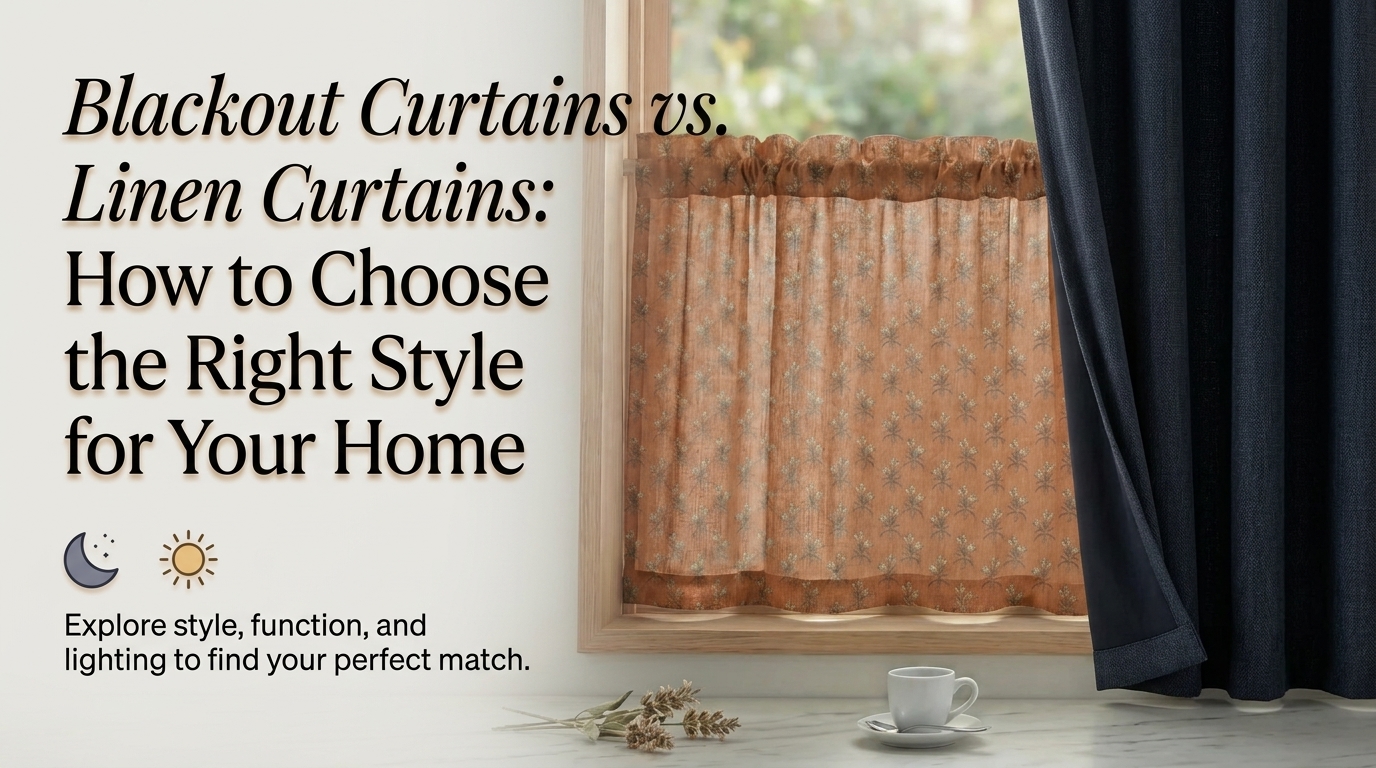
Blackout Curtains vs. Linen Curtains: How to Choose the Right Style for Your Home

Compare blackout and linen curtains to discover the best option for your home's lighting, privacy, comfort, and interior style. Learn how to choose suitable curtains for every room.
Have you ever woken up earlier than planned because sunlight streamed through your bedroom window? Or bought beautiful curtains for your living room, only to discover that they offered less privacy than you expected?
Choosing the right window coverings can be surprisingly challenging. Curtains influence how much light enters a room, how private your home feels, and even the overall atmosphere of your interior. The wrong fabric or style can leave a bedroom too bright, a living room feeling heavy, or a space looking unfinished.
Two popular options are Blackout Curtains and Linen Curtains. Although both can enhance your home, they serve different purposes. Understanding their differences can help you choose curtains that suit your lifestyle, interior design, and practical needs.
Common Problems When Choosing Curtains
Too Much Sunlight and Poor Sleep
Bright morning sunlight, streetlights, and nearby buildings can make a bedroom uncomfortable, especially if you work night shifts or prefer a darker sleeping environment. Standard decorative curtains may soften sunlight without blocking enough of it.
Rooms That Feel Dark or Heavy
On the other hand, curtains designed to block most incoming light may not be ideal for every room. In smaller living spaces, thick fabrics and dark colours can sometimes make the interior feel less open.
Privacy Without Losing Natural Light
Many homeowners want privacy while still enjoying daylight. Heavy curtains can provide coverage, but keeping them closed throughout the day may prevent natural light from reaching the room.
These challenges explain why selecting the right curtain requires more than matching colours to furniture.
Why Do Different Curtain Fabrics Perform Differently?
Curtain performance depends on several factors, including fabric thickness, weave, lining, colour, and how closely the curtains fit around the window.
Lightweight fabrics generally allow more daylight to pass through, creating a soft and airy appearance. Heavier materials and specialised linings can reduce incoming light and improve privacy.
Window size and installation also matter. Even effective light-blocking fabric may allow sunlight to enter around the sides, top, or bottom if the curtains are too small or poorly fitted.
Before buying, consider what matters most in each room: darkness, daylight, privacy, appearance, or a combination of these features.
Blackout Curtains: Best for Light Control and Privacy
Blackout Curtains are designed to block most incoming light when properly selected and installed. They are particularly useful in rooms where darkness and privacy are priorities.
Where Do Blackout Curtains Work Best?
Bedrooms: Reduce unwanted early-morning sunlight and streetlight glare.
Nurseries: Help create a darker environment for naps, although safe-sleep practices remain essential.
Media rooms: Reduce glare on television screens and improve viewing comfort.
Shift workers' rooms: Make daytime rest more comfortable by limiting incoming light.
The level of darkness depends on the fabric, lining, colour, and installation. For the best result, look for curtains with sufficient width and length to minimise gaps around the window.
What About Thermal Benefits?
Some blackout curtains also feature thermal linings that can help reduce heat transfer through windows. Depending on the product and installation, they may help a room feel more comfortable during hot or cold weather.
However, not every blackout curtain provides the same insulation, and curtains alone will not eliminate drafts or replace proper window insulation.
Linen Curtains: Best for a Natural, Airy Look
Linen Curtains are popular for their relaxed texture, natural appearance, and ability to complement a wide range of interiors. Their lightweight or medium-weight construction can help a room feel bright and inviting.
Where Do Linen Curtains Work Best?
Living rooms: Add softness without making the space feel overly formal.
Dining areas: Create a natural, understated backdrop for furniture and décor.
Home offices: Diffuse daylight and create a pleasant working environment, depending on the fabric's opacity.
Bedrooms: Offer a calm, breathable-looking aesthetic when strong light blocking is not essential.
Linen can suit minimalist, contemporary, coastal, and traditional interiors. Its natural texture adds visual interest even when the colour palette is simple.
However, standard linen curtains generally do not block as much light as dedicated blackout designs. Pure linen can also wrinkle naturally, which is part of its character rather than necessarily a defect.
Blackout Curtains vs. Linen Curtains: How to Make the Right Choice
The best option depends on the room and your daily routine.
- Feature
- Blackout Curtains
- Linen Curtains
- Light control
- Excellent when properly fitted
- Usually allows more light through
- Privacy
- Strong when closed
- Depends on fabric thickness and weave
- Appearance
- Often structured and substantial
- Natural, relaxed, and textured
- Best suited for
- Bedrooms and media rooms
- Living rooms and bright spaces
- Maintenance
- Depends on fabric and lining
- May require attention to natural wrinkles
- Versatility
- Ideal when darkness matters
- Ideal when style and daylight matter
You do not necessarily have to choose one style for your entire home. Mixing curtain types can be a more practical solution.
For example, use blackout curtains in the bedroom and linen curtains in the living room. If you love linen's appearance but need darkness at night, consider lined linen curtains or a separate blackout roller blind behind decorative linen panels.
How to Choose High-Quality Curtains That Last
Before purchasing, measure your windows carefully. Measure the width of the curtain pole or track, not just the glass, and decide whether you want the curtains to sit at the sill, below it, or close to the floor.
Next, check the fabric specifications. For blackout designs, look for details about the lining and light-blocking performance. For linen, check whether the fabric is pure linen or a blend, as this can affect texture, drape, and maintenance.
Also consider the colour scheme. Neutral shades can make curtains easier to coordinate with changing décor, while deeper colours can create a more dramatic effect.
If you want to compare different window-treatment styles, TheHues is one option to explore. Reviewing its available fabrics, sizes, colours, and lining choices can help you identify designs that balance appearance with everyday functionality.
For a more polished result, pay attention to construction quality, suitable hardware, and proper installation. Well-chosen curtains can remain a useful part of your home for years.
Why Investing in the Right Curtains Is Worthwhile
Quality curtains can improve more than the appearance of a room.
Greater comfort: Effective light control can make bedrooms and media rooms more comfortable, while lighter fabrics help maintain a bright atmosphere in shared spaces.
A more cohesive interior: Matching fabric, colour, and texture to your existing décor can make a room feel thoughtfully designed.
Better everyday functionality: Choosing the right style for each window reduces the need to constantly adjust your curtains to manage glare or privacy.
Potential energy savings: Some lined or thermal curtain designs may help reduce heat transfer, depending on the windows, fabric, fit, and local climate.
Exploring options from retailers such as TheHues can help you compare designs and find a balance between long-term value and visual appeal.
Conclusion: Choose Curtains That Fit Your Lifestyle
The right curtains should make your home more comfortable while reflecting your personal style. Blackout Curtains are an excellent choice when darkness, privacy, and reduced glare are priorities. Linen Curtains are better suited to spaces where natural texture, softness, and daylight take centre stage.
Consider the purpose of each room before making a decision. You may find that combining both styles creates the best balance throughout your home.
Take accurate measurements, compare fabric specifications, and explore suitable options from TheHues to find window coverings that meet your needs. With a little planning, your curtains can become more than a decorative finishing touch; they can make everyday living more comfortable and enjoyable.