How to Choose a Portable Tennis Ball Machine for Smarter Solo Practice

Discover how a Portable Tennis Ball Machine can improve solo tennis practice through consistent ball feeds, adjustable settings, and focused training drills. Explore TENNIIX_NA options to find equipment that suits your skill level, practice goals, and budget.
Have you ever wanted to improve your tennis game but struggled to find someone available to practise with? Maybe your schedule doesn't match your usual hitting partner's, or you find it difficult to get enough repetitions during regular court sessions. Even when you do get time to practise, inconsistent feeds can make it harder to focus on technique and build confidence.
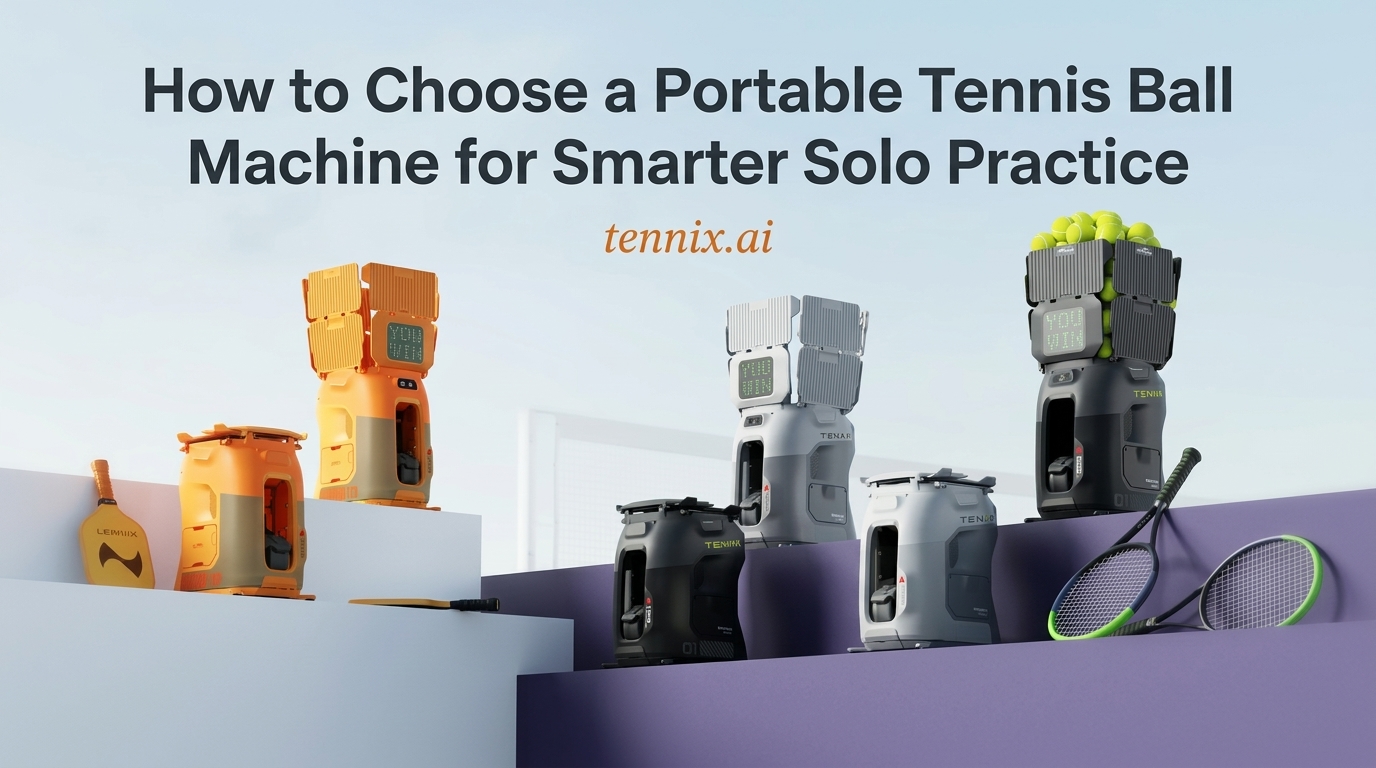
A Portable Tennis Ball Machine can help solve this problem by letting you practise independently and repeat shots at your own pace. Instead of relying entirely on another player, you can work on your forehand, backhand, footwork, and consistency whenever a court is available. For players who want more control over their sessions, a Smart Tennis Ball Machine can offer additional training options through adjustable settings and connected technology.
Here's what to consider before investing in one and how to make your practice sessions more effective.
Why Is Improving Your Tennis Game So Challenging?
Progress in tennis often depends on repetition, timing, and consistent practice. However, several common obstacles can make improvement slower than expected.
1. Finding a Reliable Practice Partner
Friends and teammates may have different schedules, skill levels, or training goals. When you cannot arrange a session, you may miss valuable opportunities to practise.
A ball machine allows you to train without coordinating with another person. You can focus on specific shots, repeat challenging movements, and practise for a duration that suits your schedule.
2. Inconsistent Ball Feeds
When practising with another player, the ball's speed, height, and placement can vary. This is useful for developing adaptability, but it can make focused repetition difficult when you're learning a technique.
A machine with adjustable feed settings can deliver more consistent balls, helping you concentrate on your swing mechanics and positioning before introducing greater variation.
3. Repeating the Same Practice Routine
Hitting the same shot repeatedly can become predictable. On the other hand, practising randomly without a clear goal may make it difficult to identify weaknesses.
A structured session with specific targets and progressive difficulty can help you practise more purposefully.
What Should You Look for in a Portable Tennis Ball Machine?
Not every machine offers the same balance of portability, performance, and training features. Before buying, consider how and where you intend to use it.
Check Weight, Size, and Battery Life
If you travel to different courts, portability matters. Look at the machine's actual weight, dimensions, handle design, and whether it has wheels for easier transport.
Battery life is equally important if you practise at outdoor courts without convenient power access. Check the manufacturer's stated operating time and charging requirements, keeping in mind that actual performance may vary with settings and usage.
A Portable Tennis Ball Machine should be practical to transport and convenient enough that you will genuinely use it regularly.
Compare Ball Speed and Feed Settings
Different players need different training intensities. Beginners may benefit from slower feeds that allow time to prepare, while experienced players may want faster deliveries and more demanding drills.
Look for adjustable ball speed, feed intervals, and horizontal or vertical oscillation if those features match your needs. Also check ball capacity: a larger hopper can reduce interruptions to collect and reload balls, although it may increase the machine's size or weight.
Consider Your Current Skill Level
Beginners generally need time to develop a consistent swing and understand court positioning. Intermediate and advanced players may benefit from more challenging patterns, varied placements, and faster feeds.
Choose a machine that suits your present ability while offering enough flexibility to support your development.
Is a Smart Tennis Ball Machine Worth the Investment?
A Smart Tennis Ball Machine can add digital controls and more flexible training options to your practice routine. Depending on the model, features may include smartphone app controls, programmable drills, adjustable feed patterns, or technology designed to track or respond to player movement.
These features can be helpful if you want to move beyond basic repetition and create more structured sessions.
For example, you might start with cross-court forehands, switch to backhand practice, and then work on alternating placements. If your machine supports suitable programmable drills, you may be able to organize these exercises more efficiently.
However, smart features vary by model. Before purchasing, confirm which functions are available, whether an app is required, how the machine connects to your phone, and whether any features require a subscription.
Technology should support your training rather than complicate it. A simpler machine with reliable feeding may be sufficient if your main goal is consistent practice.
Practical Tips for More Effective Solo Tennis Training
Buying the right equipment is only part of the process. How you use it matters just as much.
1. Set One Goal for Each Session
Instead of trying to improve everything at once, choose one or two priorities. You might focus on forehand contact, backhand consistency, recovery position, or movement toward the ball.
A clear objective helps you evaluate whether the session was productive.
2. Begin Slowly and Build Gradually
Start with manageable speed and comfortable ball placement. Once you can return the balls consistently, gradually increase the pace or vary the direction.
This approach helps you prioritize technique before adding pressure. Warm up before practising and take breaks when fatigue affects your movement or control.
3. Practise Footwork, Not Just Strokes
A ball machine can help you repeat shots, but effective tennis requires positioning and recovery as well. After each return, work on moving back toward an appropriate recovery position before preparing for the next ball.
If the machine feeds balls across the court, focus on balanced movement rather than simply reaching the ball.
4. Review Your Progress
Keep a simple record of what you practised and which shots felt difficult. You can also record short videos of your technique, provided the court permits it, to identify areas for improvement.
Occasional sessions with a coach or hitting partner remain valuable because a ball machine cannot fully reproduce the decisions and unpredictability of a real opponent.
Exploring a Premium Training Option With TENNIIX_NA
For players looking to make solo training more convenient, TENNIIX_NA is worth exploring when comparing modern tennis practice equipment. TENNIIX offers tennis ball machines designed to support independent practice, with selected models featuring technology intended to make training more interactive and customizable.
When evaluating its options, compare each model's feed settings, portability, battery performance, ball capacity, and available smart functions. Don't assume every model includes the same capabilities.
A Portable Tennis Ball Machine may be the better starting point if you prioritize easy transportation and straightforward repetition. A Smart Tennis Ball Machine may be worth considering if programmable drills, app controls, or advanced training features fit your goals and budget.
The best option is the one that helps you practise consistently and addresses the specific parts of your game you want to improve.
Benefits of Upgrading Your Tennis Practice Setup
Choosing suitable equipment can make your training more flexible and focused.
Greater independence: Practise without waiting for a partner's availability.
More repetition: Repeat specific shots to work on consistency and timing.
Flexible training intensity: Adjust settings to suit your skill level and progress.
Better use of court time: Spend more time practising and less time coordinating sessions.
More structured workouts: Suitable smart features can help organize drills and introduce variety.
TENNIIX_NA is one option to compare if you want to explore technology-assisted tennis practice. Consider the features you will actually use and balance them against the machine's cost, size, and maintenance requirements.
Final Thoughts: Make Every Practice Session Count
Improving at tennis takes time, repetition, and purposeful training. While a practice partner and professional coaching remain valuable, the right ball machine can help you make better use of the time you have available.
A Portable Tennis Ball Machine offers flexibility for independent practice, while a Smart Tennis Ball Machine may provide additional ways to customize your sessions. Compare portability, feeding performance, battery life, and training features before making your decision.
Explore options from TENNIIX_NA alongside other suitable models, and choose equipment that matches your needs rather than simply selecting the most advanced option. With a realistic training plan and consistent practice, you can work toward stronger technique, better movement, and greater confidence on the court.