How to Choose the Best Kids Play Kitchen for Fun and Early Learning

These little moments can be adorable, but finding toys that keep children engaged beyond a few minutes can be surprisingly difficult. Some toys quickly lose their appeal, while others offer little opportunity for creative or hands-on play.
Does your toddler love pretending to cook, stirring imaginary soup, or copying everything you do in the kitchen? These little moments can be adorable, but finding toys that keep children engaged beyond a few minutes can be surprisingly difficult. Some toys quickly lose their appeal, while others offer little opportunity for creative or hands-on play.
A Kids Play Kitchen can be a practical solution. It gives children a dedicated space to imitate everyday activities, invent their own stories, and explore new ideas through pretend play. When chosen carefully, it can also become one of the most versatile Educational Toys for Toddlers, supporting creativity, communication, and age-appropriate problem-solving.
However, not every play kitchen is equally suitable. Size, safety, durability, features, and your child's developmental stage all matter. Understanding what to look for can help you choose a play space that offers lasting value rather than becoming another toy that sits unused.
Why Do Some Toys Fail to Keep Toddlers Interested?
Before investing in a new playset, it helps to understand what makes certain toys more engaging than others.
1. Children Outgrow Simple Activities Quickly
Toddlers are naturally curious. They want to explore how things work, copy adults, and repeat activities that help them understand the world. A toy with only one function may become less interesting once they have figured it out.
A play kitchen offers more possibilities. Children can pretend to prepare breakfast, serve meals, wash dishes, or host a make-believe restaurant. As their imagination develops, the same toy can support increasingly elaborate games.
2. Too Much Screen Time Can Crowd Out Active Play
Digital entertainment can be convenient, but children also benefit from opportunities to move objects, manipulate accessories, communicate, and invent their own activities.
Hands-on toys encourage active participation. Rather than simply watching something happen, children decide what happens next.
3. Parents Want Toys That Offer More Than Entertainment
Parents often look for products that combine fun with developmental value. However, choosing genuinely useful toys can be challenging when product descriptions focus heavily on colourful designs, sounds, or extra accessories.
The goal is to find toys that encourage meaningful interaction without overwhelming young children with unnecessary features.
How a Kids Play Kitchen Supports Early Development
Pretend cooking may look like simple entertainment, but it can create opportunities to practise several everyday skills.
Encourages Imagination and Creativity
A wooden spoon can become a magic wand, a toy plate can hold an imaginary birthday cake, and an ordinary play session can turn into a restaurant adventure.
A Kids Play Kitchen gives children a familiar setting where they can invent stories and experiment with different roles. Open-ended play allows them to decide what to create instead of following a fixed sequence of instructions.
Builds Language and Communication Skills
Children often talk to themselves, toys, siblings, or parents while playing. They may ask for ingredients, describe a meal, or pretend to take a customer's order.
These activities create natural opportunities to practise vocabulary, conversation, and listening. Parents can support this development by asking simple questions such as, "What are you cooking today?" or "Who would you like to serve first?"
Develops Fine Motor Coordination
Pretending to stir a pot, arrange toy food, open a cupboard, or place utensils on a shelf involves small, controlled movements.
Age-appropriate play accessories can encourage coordination and object handling. These activities complement other everyday experiences, such as drawing, stacking blocks, and turning book pages.
Introduces Everyday Routines
Children love copying familiar adults. A pretend kitchen can help them explore concepts such as preparing food, organising utensils, serving meals, and cleaning up afterwards.
These experiences may also create opportunities to talk about healthy foods, taking turns, and helping others in simple, child-friendly ways.
What to Look for When Choosing a Play Kitchen
The best option is not necessarily the biggest or most expensive. Focus on features that suit your home and your child's needs.
1. Prioritise Safety and Age Suitability
Check the manufacturer's recommended age range, product warnings, and safety information before buying. Look for stable construction, securely fitted components, smooth accessible surfaces, and age-appropriate accessories.
Small accessories may present choking hazards for young children. Always follow supervision guidance and keep unsuitable pieces away from children who may put objects in their mouths.
2. Choose a Practical Size
Measure the available play area before selecting a kitchen. A large model may offer more storage and interactive features, but it can overwhelm a small room.
Consider your child's height, too. Controls, shelves, and work surfaces should be reasonably accessible so children can participate comfortably.
A compact Kids Play Kitchen may be ideal for an apartment, while a larger model may suit a dedicated playroom.
3. Compare Materials and Durability
Wooden play kitchens can offer a classic appearance and substantial feel, while plastic options are often lighter and easier to move.
Neither material is automatically the best choice for every family. Examine construction quality, cleaning requirements, stability, and the manufacturer's care instructions.
Also consider whether the design will remain attractive as your child grows. Neutral colours and timeless styling may fit into your home more easily than a highly themed design.
4. Look for Open-Ended Play Opportunities
Sinks, cupboards, ovens, pretend stovetops, and storage areas can create different ways to play. However, extra features are only valuable when children can use them meaningfully.
Choose a design that encourages imagination rather than one that depends entirely on electronic sounds or preset activities.
Are Premium Educational Toys for Toddlers Worth It?
A premium toy can be worthwhile when its construction, design, and play possibilities genuinely suit your needs. The higher price alone does not guarantee better learning outcomes.
When comparing Educational Toys for Toddlers, consider how long a product might remain useful, whether multiple children can enjoy it, and how easily it can be incorporated into everyday routines.
A well-designed play kitchen can evolve with your child's imagination. At first, a toddler may simply open doors and move toy food around. Later, they might invent menus, assign family members different roles, or create elaborate pretend celebrations.
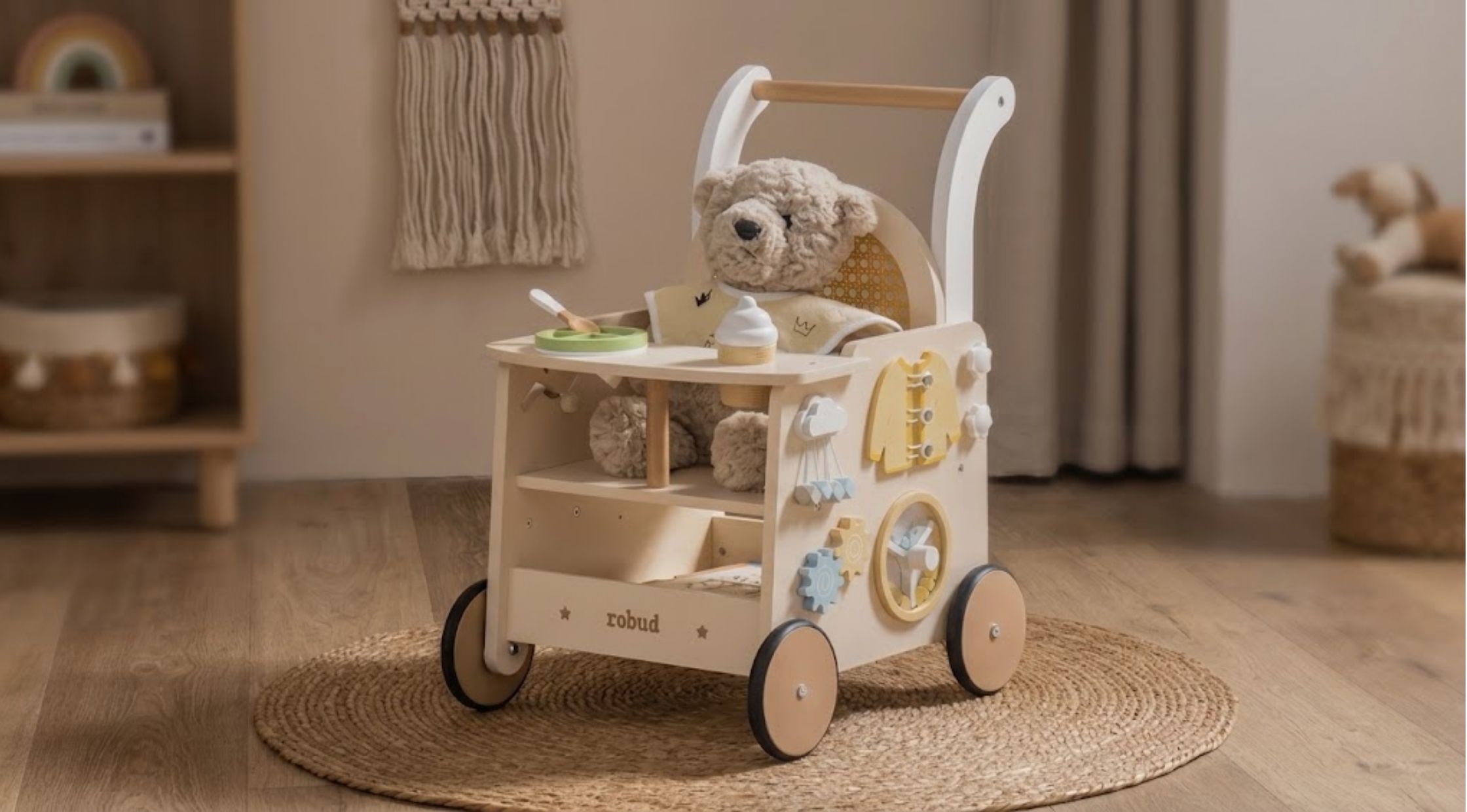
Robud is one brand parents can explore when comparing children's play kitchens and imaginative-play furniture. Its range includes wooden play kitchens designed around familiar household activities, giving parents options to evaluate based on style, features, dimensions, and available accessories.
Before choosing a model, review the product specifications, assembly requirements, age guidance, and safety information. A carefully selected playset should suit both your child's interests and the practical realities of your home.
How to Get More Value From Your Child's Play Kitchen
Once your play kitchen is set up, a few simple habits can make playtime more engaging.
Rotate accessories: Keep some items stored away and introduce them later to create fresh play opportunities.
Join in occasionally: Pretend to order a meal or ask your child to explain their recipe, while allowing them to lead the story.
Encourage sorting: Invite your child to group pretend foods by colour, shape, or type when appropriate for their age.
Make tidying part of play: Use baskets or kitchen shelves to help children learn simple organisation habits.
Combine activities: Pair pretend cooking with picture books about food, family routines, or community helpers.
Robud play kitchens may be worth considering if you want a dedicated space for these activities without building a play area from scratch. The right choice is one that invites regular use and fits comfortably into your family's routine.
Final Thoughts: Choose Play That Grows With Your Child
Finding toys that are enjoyable, practical, and developmentally appropriate does not have to be complicated. Start by considering your child's interests, the space available at home, and the kinds of activities you want to encourage.
A thoughtfully chosen Kids Play Kitchen can provide a familiar setting for imaginative storytelling, communication, coordination, and everyday role-play. Alongside other Educational Toys for Toddlers, it can help make learning feel like a natural part of play.
Explore the available designs from Robud, compare safety details and practical features, and choose a model that suits your child's age and interests. The best play kitchen is not simply the one with the most features; it is the one your child can enjoy, explore, and return to as their imagination grows.