Outdoor Trampoline vs. In-Ground Trampoline How to Choose the Best Fit for Your Backyard

Compare outdoor and in-ground trampolines to find the right fit for your backyard. Explore installation, safety, space requirements, durability, and maintenance tips before choosing the best trampoline for your family.
Outdoor Trampoline vs. In-Ground Trampoline: How to Choose the Best Fit for Your Backyard
Want to create a backyard where your children can stay active, enjoy the outdoors, and spend less time sitting in front of screens? A trampoline can be an exciting addition, but choosing the right one isn't always straightforward. You might be concerned about limited garden space, how the equipment will look, or whether it will be durable enough for years of family fun.
Two popular options are an Outdoor Trampoline and an In-Ground Trampoline. Both can encourage active play, but they differ in installation, appearance, maintenance, and space requirements. Understanding these differences can help you invest in a trampoline that suits your garden, your family, and your long-term plans.
Common Problems When Choosing a Backyard Trampoline
Buying a trampoline can seem simple until you start comparing sizes, shapes, frames, and installation options. Without considering your garden's layout and your family's needs, it's easy to choose a model that becomes inconvenient later.
Here are some common challenges homeowners face.
Limited garden space: A large trampoline may leave little room for other outdoor activities.
Visual clutter: Some families prefer a garden that looks neat rather than dominated by bulky equipment.
Installation concerns: Different trampoline designs may require very different preparation and setup.
Weather exposure: Outdoor equipment must withstand conditions such as rain, sunlight, and wind.
Safety worries: Parents want children to enjoy active play while reducing preventable risks.
Long-term maintenance: Worn jumping mats, damaged springs, and deteriorating padding can mean additional costs.
These concerns are worth considering before comparing prices. The best trampoline is not necessarily the biggest or most expensive; it is the one that fits your available space, maintenance preferences, and intended use.
Why Do Trampoline Choices Make Such a Difference?
The main difference between trampoline styles comes down to their design and installation.
A traditional Outdoor Trampoline sits above ground on a supporting frame. This design is often easier to install than an in-ground model, although assembly requirements vary. It may also be easier to inspect underneath the frame and access certain components when maintenance is needed.
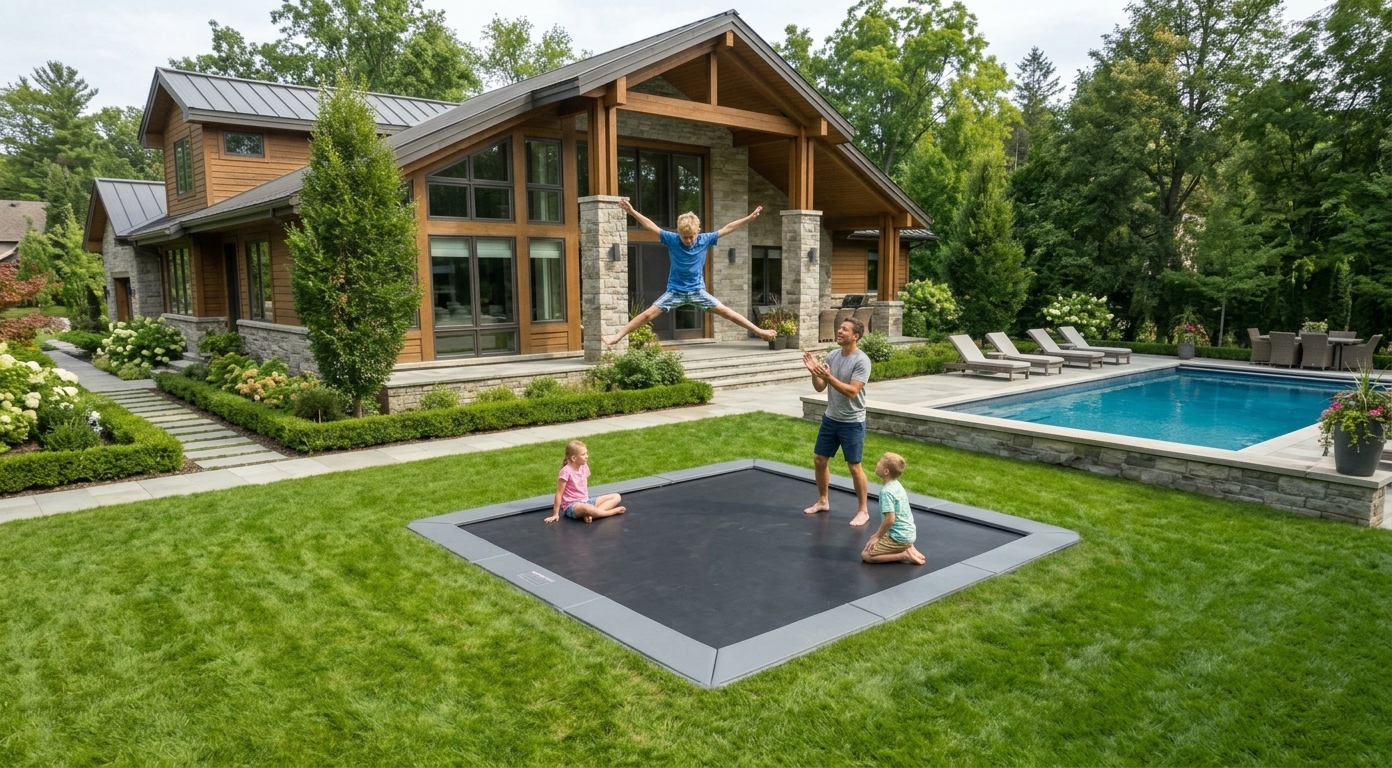
An in-ground trampoline is installed in an excavated area so that the jumping surface sits close to ground level. Its lower profile can create a more integrated appearance, but installation requires careful planning. Drainage, soil conditions, excavation, airflow, and the manufacturer's specifications all matter.
Neither design automatically eliminates safety risks. Both require appropriate supervision, maintenance, and adherence to the manufacturer's instructions. Choosing between them means balancing convenience, appearance, installation complexity, and available space.
Practical Tips for Choosing the Right Trampoline
1. Measure Your Backyard Before Buying
Start by measuring the area where you want the trampoline to sit. Include the trampoline's full dimensions and allow the clear space recommended by the manufacturer around it.
Check for nearby fences, trees, walls, garden furniture, overhead branches, and other potential hazards. A trampoline should not be squeezed into a space simply because its frame fits.
For smaller gardens, a compact model may be more practical than a large recreational trampoline. In larger spaces, you may have greater flexibility to create a dedicated play area.
2. Consider Installation and Ground Conditions
If you want a straightforward setup, a traditional Outdoor Trampoline may be the more convenient option. Many models come with assembly instructions, although the time and effort involved depend on the size and design.
An In-Ground Trampoline typically requires more preparation. Excavation must match the product's specifications, and the surrounding area must be designed to support safe operation and suitable airflow beneath the jumping surface. Poor drainage can lead to water accumulation, damage, or additional maintenance.
Before choosing an in-ground design, check local requirements and consult an experienced installer if you are unsure about excavation, drainage, or soil stability.
3. Compare Materials and Construction
A trampoline's long-term performance depends partly on its construction and the conditions in which it is used.
Look for a sturdy frame, a jumping mat designed for outdoor exposure, durable stitching, and weather-resistant protective padding. Check whether replacement parts are available and whether the manufacturer provides clear care instructions.
For either design, inspect springs or other suspension components regularly. Replace worn or damaged parts according to the manufacturer's guidance rather than continuing to use the equipment.
4. Make Safety a Priority
Before purchasing, review the manufacturer's safety instructions and age or weight recommendations. Consider whether the model includes an appropriate enclosure and whether it is compatible with the trampoline's design.
Place the trampoline on a suitable, stable site and maintain the required clearance around it. Children should be supervised, and users should follow the manufacturer's rules about the number of people allowed to jump at once.
An In-Ground Trampoline should not be treated as inherently safe simply because it is closer to the ground. Falls, collisions, and other injuries remain possible. The surrounding area, installation quality, equipment condition, and user behaviour all matter.
5. Think About Maintenance Throughout the Year
Outdoor equipment needs regular attention. Remove debris, check protective padding, inspect the enclosure and frame, and look for signs of rust or wear. Follow the manufacturer's recommendations for severe weather, storage, and cleaning.
With an in-ground model, pay additional attention to drainage and the area beneath the jumping surface. Keeping the pit and ventilation system in suitable condition is essential to its ongoing performance.
Why a Premium Trampoline May Be Worth Considering
A trampoline is an investment in outdoor recreation, so choosing solely on the initial price may not provide the best long-term value.
A well-designed premium model may offer a combination of durable materials, thoughtful construction, suitable safety features, and access to replacement components. The most useful features depend on your family's needs and the environment where the trampoline will be installed.
Exploring the options at Trampolines can help you compare different sizes, designs, and accessories before making a decision. Review product specifications carefully, paying particular attention to the recommended installation conditions, weight limits, enclosure compatibility, and warranty coverage.
If you prefer flexibility and a simpler installation process, an Outdoor Trampoline may suit your household. If a low-profile design is a priority and you are prepared for the additional site preparation, an In-Ground Trampoline may be worth investigating.
The important thing is to match the product to your garden rather than trying to make your garden accommodate an unsuitable model.
How the Right Trampoline Can Improve Your Outdoor Space
A suitable trampoline can give children another reason to enjoy outdoor play and provide families with a fun activity at home. Regular active play can contribute to physical activity, coordination, and balance, although outcomes vary and trampoline use carries injury risks.
A traditional above-ground design can create a dedicated play area without requiring excavation. An in-ground design may blend more naturally into a landscaped garden, leaving a less prominent visual profile when not in use.
Both can be enjoyable additions when selected, installed, and maintained properly. Before upgrading, compare the total cost, including delivery, assembly, site preparation, accessories, and future replacement parts.
Trampolines offer a starting point for exploring different options and identifying a design that fits your available space. Taking time to compare specifications can help you avoid unnecessary expenses and make a more confident decision.
Conclusion: Find a Trampoline That Fits Your Family
Choosing between an Outdoor Trampoline and an In-Ground Trampoline comes down to your garden, budget, installation preferences, and maintenance expectations.
An above-ground model may be a practical choice if you want a more straightforward setup, while an in-ground design may appeal to homeowners who prefer a lower-profile look and can accommodate the required excavation and drainage.
Measure your space, review safety requirements, compare construction quality, and plan for ongoing maintenance before buying. Explore the available options at Trampolines and focus on the features that genuinely suit your family.
With thoughtful planning, you can create a backyard play area that encourages outdoor activity while fitting comfortably into your home and lifestyle.
Recent Blogs
-
Portable Ice Maker vs. Nugget Ice Maker: How to Choose the Best One for Your Home
-
How to Create a Brighter, More Functional Bathroom with an LED Bathroom Mirror and Bathroom Vanity
-
Electric Wheelchair vs. Portable Mobility Scooter: How to Choose the Right Mobility Aid
-
How a Home Sauna Can Transform Your Wellness Routine: Understanding Infrared Sauna Benefits
-
How Sweatpant Overalls Make Everyday Comfort and Style Effortless